Run in the Heat
When talking about running in heat, the first thing is obviously hydration, which we discuss in details here.
The less common topic is that you may want to adjust your target pace/effort according to the heat too.
Measurement
When measuring the impact of heat, temperature is obviously the first factor.
However, humidity is can have a far more impact sometime (e.g., when humidity is very high). It reduces the cooling effect of evaporation, which is how our body cool down via sweating.
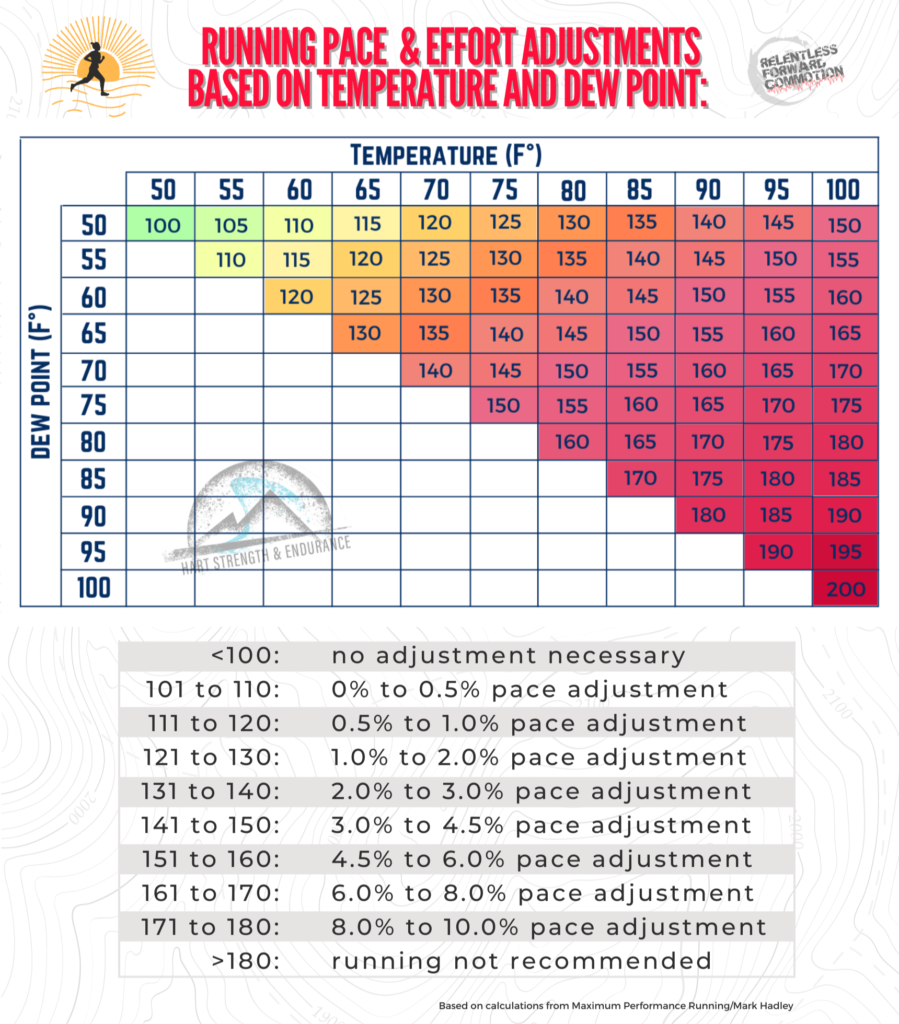
One proxy we can use to combine the two factors above is
\[Heat Index = Dew Point + Temperature (in fahrenheit)\]Dew Point is often accessible in weather report, which is
\[Dew Point = Temperature (in Celsius) - (100-Relative Humidity In Percentage) / 5\]Below is the adjustment chart from Maximum Performance Running
Impact on body
Heat does not just impact performance, this research found that hard workout in warm weather (~29C) will significantly increase body core temperature (to ~39.6C), which is close to the alerting level similar to fever. It add stress to gut and immune system, may impact recovery and general health.
Interestinly, another study suggesting fueling, particularly carb, during workout improves post-heat performance, though body adapt to heat either way. Also this one found some Colostrum supplement seems to improve gut functions and endurance performance under heat.
My take away - treat heat with respect and prepare adequate nutrition for better recovery.
Run in the Cold
Protection
Keeping the body warm from the cold is always the top priority. Weather can be unpredictable and poses risk to health and life.
Overall, similar to many other outdoor sports:
- Layers - so that you can adjust when necessary. Generally, one wants to dress 15-20 degrees warmer than the actual temperature. Also, also pay attention to wind, which can take away heat from the body easily.
- Hat - a hat is almost a necessity in winter.
- Gloves - do not be afraid to wear heavy gloves. One’s hands/warms are less active, so sometimes heavy gloves (e.g. ski gloves) can be helpful.
- Masks/neck gaiters - less popular, but definitely helps a lot in extremely cold weather.
- Shoes - given one’s feet are very active, they generally need less protection fron the cold. However, many sole material can behave differently (stiff, grips), plus icy road increases the risk of slipping.
Safety
Daylight is much shorter in many places, so make youself visible by wearing reflectives, or flashing lights for safety. It is even helpful to bring a headlamp.
Hydration
Our body is often less sensitive to thirsty during cold weather. That does not mean it needs less. Still pay attention to hydration.
More Warm-Up
This one is probably obvious. Being cold outside, we will need more time to warm up.